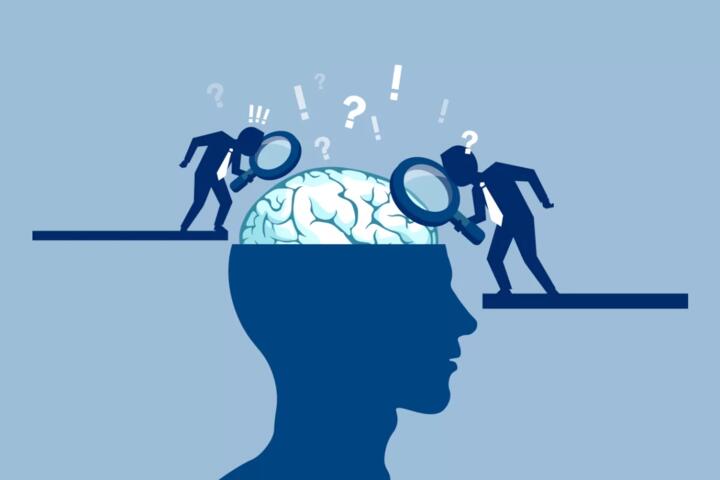
The Cognitive Reserve
Willpower is often described as the ability to delay gratification or override impulsive responses. In clinical psychology, this is known as executive function, primarily managed by the prefrontal cortex. It is the mental energy we use to resist a sugary snack, stay focused on a complex spreadsheet, or remain calm during a tense board meeting.
Consider a software engineer at a firm like Microsoft. By 3:00 PM, after five hours of deep coding and two debugging sessions, they find it significantly harder to resist checking social media. This isn't a lack of character; it is a measurable shift in how the brain prioritizes tasks based on perceived energy costs.
Recent data from the American Psychological Association (APA) indicates that 27% of adults cite a lack of willpower as the primary barrier to making healthy lifestyle changes. Furthermore, research into "Decision Fatigue" shows that judges are 65% more likely to grant parole in the morning than in the late afternoon, illustrating how cognitive stamina fluctuates.
Barriers to Control
Most people treat willpower like an emergency brake—something to be pulled only when things go wrong. This reliance on "white-knuckling" through tasks is the first major mistake. When you rely solely on effort, you ignore the biological signals of glucose fluctuation and mental saturation, leading to inevitable relapses in discipline.
The "Ego Depletion" theory, popularized by Roy Baumeister in the late 90s, suggested willpower is a finite fuel tank. While partially debunked by recent replication studies, the danger lies in the "belief" of exhaustion. If you believe your brain is out of fuel, your performance drops preemptively to conserve energy.
The consequences of poor willpower management are cumulative. Chronic self-control failure leads to "Intention-Behavior Gap," where individuals know what to do but cannot execute. This creates a cycle of stress and shame, which further impairs the prefrontal cortex, making future self-control even harder to achieve.
Real-world situations often involve "opportunity cost" friction. Every time you say "no" to a distraction, your brain calculates the value of the missed reward. If the task at hand (e.g., writing a report) has low perceived value, the friction eventually outweighs the willpower, leading to what we call "burning out on the small stuff."
Strategic Discipline
Identity-Based Habit Shift
Stop focusing on the action and start focusing on the identity. Research by James Clear and Stanford’s BJ Fogg shows that people who say "I don't eat sugar" (identity) have a 50% higher success rate than those who say "I can't eat sugar" (restriction). Identity eliminates the need for a daily "choice," saving cognitive energy.
Environment Architecture
Willpower is a backup, not a primary strategy. High-performers use "Choice Architecture" to remove temptations. Tools like Cold Turkey or Freedom.to block distracting sites at the BIOS level. By removing the choice to procrastinate, you bypass the need for willpower entirely.
The Glucose-Motivation Link
While the "brain runs on sugar" theory is oversimplified, stable blood glucose is vital for executive function. A study in Health Psychology found that low-glycemic meals prevent the mid-day "willpower dip." Using apps like MyFitnessPal to track nutrient density can lead to a 20% increase in afternoon focus.
Cognitive Reappraisal
Carol Dweck’s research suggests that if you view mental effort as "energizing" rather than "draining," you don't experience the typical depletion effects. This is a "Growth Mindset" applied to neurobiology. Practicing mindfulness via Headspace or Calm trains the brain to observe impulses without acting on them.
The 10-Minute Rule
Tell yourself you will do a task for just 10 minutes. This lowers the "activation energy" required by the brain. Once started, the Zeigarnik Effect takes over—the brain’s natural tendency to want to finish a started task. This reduces the total willpower spend by 70% during the initiation phase.
Implementation Intentions
Use "If-Then" planning. "If I feel the urge to check my phone, then I will take three deep breaths." This automates the response. According to a meta-analysis of 94 studies, implementation intentions have a "large to medium" effect size ($d=0.65$) on goal achievement compared to willpower alone.
Performance Benchmarks
Case 1: Tech Startup Productivity Shift
A mid-sized SaaS company noticed a 30% drop in commit quality after 4:00 PM. They implemented "No-Meeting Wednesdays" and shifted complex architecture reviews to the 9:00 AM–11:00 AM window. Result: Bug reports decreased by 22% and employee reported "mental fatigue" scores dropped by 40% over six months.
Case 2: Executive Health Coaching
A CEO struggling with late-night binge eating and "decision fatigue" shifted their hardest decisions to a "Stand-up" format at 8:00 AM. They used Oura Ring data to correlate sleep quality with willpower stamina. By prioritizing 7.5 hours of sleep, the CEO reduced impulsive snacking by 80% and improved task completion rates by 15%.
Strategic Comparison
| Strategy | Mechanism | Willpower Cost | Long-term Success |
|---|---|---|---|
| Raw Effort | Prefrontal Suppression | High | Low (~5%) |
| Habit Formation | Basal Ganglia Automation | Low | High (~80%) |
| Environment | Stimulus Removal | Zero | Highest (~95%) |
| Mindfulness | Impulse Decoupling | Medium | Moderate (~60%) |
Avoiding Mental Fatigue
The most common mistake is multitasking. Switching between tasks carries a "switching cost" that drains cognitive resources faster than the tasks themselves. To avoid this, use "Time Blocking" via Google Calendar. Dedicate specific blocks to single tasks to keep the brain in a "flow state."
Another error is "Moral Licensing"—the idea that because you were "good" earlier (e.g., worked out), you have a "right" to be "bad" later (e.g., skip a deadline). Recognizing this cognitive bias is the first step to neutralizing it. Remind yourself that a workout isn't a "credit" but a prerequisite for mental clarity.
Don't ignore the physical. Dehydration of just 2% can significantly impair task-related attention and executive function. Keep a 1-liter water bottle on your desk. If you feel your willpower slipping, drink 250ml of water before making a decision. It’s often a physiological signal disguised as a mental one.
FAQ
Is willpower actually genetic?
While there is a genetic component to impulsivity (related to dopamine receptors), the "strength" of self-control is highly plastic. Neuroplasticity allows the prefrontal cortex to thicken with consistent practice of focus-related tasks, much like physical exercise.
Does sugar actually boost willpower?
Initial studies suggested drinking lemonade boosted self-control, but later research found the effect might be psychological (the taste of reward) rather than physiological. For sustained control, complex carbohydrates and proteins are far superior to simple sugars.
Can I "run out" of willpower forever?
No. What people describe as "burnout" is usually a chronic misalignment of values and actions. Willpower recovers with rest, sleep, and perceived autonomy. If you feel permanently drained, look at your "Why" rather than your "How."
How does stress affect my self-control?
Stress triggers the "fight or flight" system, which shunts blood away from the prefrontal cortex toward the amygdala. This makes you more reactive and less capable of long-term planning. Lowering cortisol through box breathing is a direct way to "reset" willpower.
Why is it harder to resist at night?
This is a combination of accumulated decision fatigue and the natural circadian dip in alertness. Your brain's "inhibitory control" is weakest when you are tired. The best defense is a "shut down" ritual where you remove all temptations after 8:00 PM.
Author’s Insight
In my experience working with high-output creators, I’ve found that the most "disciplined" people actually use the least amount of willpower. They aren't better at resisting temptation; they are better at avoiding it. My biggest breakthrough came when I stopped trying to "be stronger" and started making my environment "smarter." If you want to change your life, stop focusing on your muscles and start focusing on your systems. Consistency beats intensity every single time.
Summary
Willpower is not a simple fuel tank that empties, but a complex interaction between biology, belief, and environment. While cognitive fatigue is a real physiological state, it is manageable through strategic meal timing, identity-based habits, and robust environmental design. To see immediate results, audit your most "tempting" distractions today and use tools like Focus@Will or physical barriers to remove them. Move away from the myth of the "finite resource" and embrace the reality of the "managed system."