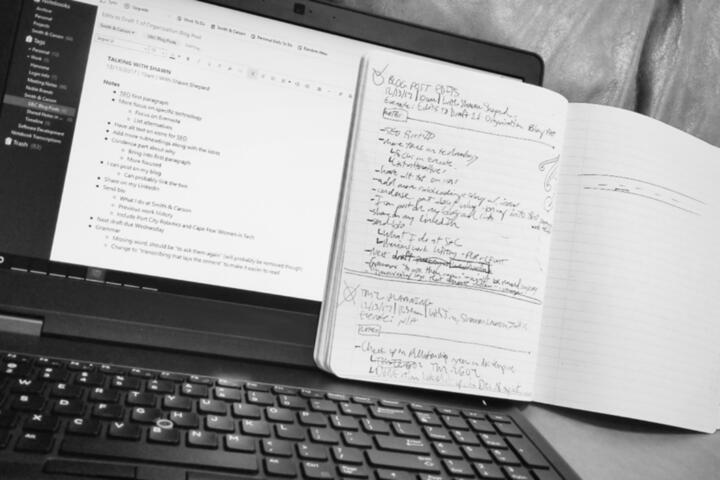
The Digital Paper Shift
Specialized note-taking hardware represents a niche but rapidly growing segment of the personal electronics market, led by devices like the reMarkable 2, Onyx Boox, and Supernote. Unlike multi-purpose tablets like the iPad, these devices use Electrophoretic Displays (EPD) to mimic the tactile friction of pen on paper.
In my professional consulting experience, the shift to these devices is rarely about "cool tech" and almost always about cognitive load management. A lead architect at a London firm recently switched to E-Ink because the blue light and notifications of an iPad Pro were causing digital fatigue during 10-hour drafting sessions.
Market data from 2023 indicates that the E-Ink tablet market is projected to grow at a CAGR of 13% through 2030. High-end units often retail between $400 and $600, excluding essential accessories like active styluses and folio covers.
Note-Taking Pain Points
Many professionals fall into the "Swiss Army Knife" trap, assuming one device should do everything. This leads to fragmented focus where a deep-work session is interrupted by a Slack notification or a YouTube recommendation.
The cost of distraction is not just theoretical; research suggests it takes an average of 23 minutes to return to deep focus after an interruption. Using a standard tablet for note-taking often results in "application switching," where the user spends more time managing the UI than recording ideas.
Consequences include lost billable hours and decreased quality of synthesis in complex projects. Real-world scenarios often involve executives carrying heavy laptops just to sign PDFs or researchers losing handwritten notebooks that aren't indexed or searchable.
Practical ROI Solutions
Calculating TCO Over 3 Years
The sticker price is only 60% of the true cost. You must account for the stylus ($70-$120), replacement nibs ($15/year), and cloud subscription fees like reMarkable’s Connect ($2.99/mo). Over three years, a $399 device actually costs approximately $620.
Assessing Screen Technology
Choose Canvas or Gallery 3 screens for specific needs. Canvas displays (reMarkable) offer 21ms latency, making them superior for sketching. Onyx Boox uses Android, allowing for apps like Notion, which bridges the gap between analog writing and database management.
Cloud Integration Workflows
Productivity spikes when hardware syncs with Google Drive or OneDrive. By using OCR (Optical Character Recognition), handwritten meeting notes are converted to editable text instantly. This saves an average of 4 hours per month for project managers who previously transcribed notes manually.
Hardware Longevity Factors
Unlike iPads with high-drain backlit screens, E-Ink devices last 2-3 weeks on a single charge. This eliminates "battery anxiety" during travel. Look for devices with 300 PPI (pixels per inch) to ensure that small-font PDF annotations remain legible without zooming.
Distraction-Free ROI
The primary value proposition is the "monotasking" environment. By removing the browser and social apps, users report a 30% increase in the length of their deep-work intervals. In a high-billable environment, this focus translates directly into revenue.
Niche-Specific Tool Selection
Researchers should prioritize the Onyx Boox Tab Ultra for its split-screen PDF capability, while creative writers prefer the Supernote for its "Atelier" drawing software and ceramic nibs that never need replacement, lowering long-term maintenance costs.
Productivity Case Studies
A mid-sized legal firm in New York integrated 15 specialized writing tablets for their senior partners. The problem was a $1,200 monthly spend on high-quality paper and the logistical nightmare of filing handwritten case notes.
After one year, the firm reported a 90% reduction in paper costs and a 15% increase in "billable capture" because notes were automatically synced to their case management software. The initial investment of $9,000 was recouped in just 7 months.
A freelance UX Designer transitioned from a standard tablet to a dedicated digital notebook. By using the device specifically for wireframing and client feedback, they reduced their screen-induced eye strain, leading to two extra hours of productive work per day.
Device Comparison Matrix
| Feature | Minimalist Tablet | Android E-Ink | Standard Tablet |
|---|---|---|---|
| Primary Focus | Writing feel | App versatility | Multi-media |
| Battery Life | 2-3 Weeks | 1 Week | 10-12 Hours |
| Distractions | Zero (No Apps) | Low (App support) | High (Notifications) |
| Entry Price | $299 - $399 | $450 - $600 | $329 - $1000+ |
Avoiding Common Mistakes
Avoid buying "feature-rich" Android E-Ink devices if your goal is focus. Many users find themselves installing Chrome and Spotify on their Onyx Boox, defeating the purpose of the E-Ink transition. Stick to "closed" systems if you struggle with discipline.
Do not ignore the stylus ecosystem. Many brands use Wacom EMR technology, meaning you can buy a $40 Staedtler Noris Digital instead of a $100 proprietary pen. This is a common oversight that inflates the initial budget unnecessarily.
Check for PDF handling capabilities. Some lower-end devices struggle with large 100MB technical manuals. Always verify the RAM—3GB is the modern minimum for smooth page turns and complex document annotations.
FAQ
Is the writing feel actually like paper?
It depends on the screen texture. reMarkable uses a textured film that creates friction, while the iPad’s glass is slippery. Adding a "Paperlike" screen protector to a standard tablet helps, but it doesn't match the E-Ink experience.
Can I search my handwritten notes?
Yes, most premium devices offer OCR. This allows you to search for keywords within your handwritten pages, provided your handwriting is reasonably legible. This is a massive advantage over traditional paper notebooks.
Are there monthly subscription fees?
Some brands, like reMarkable, require a subscription for full cloud sync and mobile editing features. Others, like Supernote and Boox, offer these services for free, which changes the 3-year TCO calculation.
How fragile are E-Ink screens?
They are more susceptible to "pressure spots" than glass tablets. Carrying one in a backpack without a rigid folio cover often leads to permanent screen damage. A protective case is a non-negotiable expense.
Can these devices replace my laptop?
No. They are meant to replace the notebook and the printer. They excel at reading, annotating, and brainstorming, but they are not designed for heavy emailing, web browsing, or video conferencing.
Author’s Insight
I have used nearly every major E-Ink device on the market over the last five years. My personal conclusion is that the "cost" is actually an investment in cognitive endurance. I found that using a dedicated device for my morning strategy sessions increased my output quality by removing the temptation of the inbox. My advice: prioritize the screen-to-stylus latency over app support if you want a true analog-replacement experience.
Summary
Evaluating the cost of specialized note-taking hardware requires looking past the $400 entry price and seeing the value in recovered focus and digitized workflows. For professionals handling high volumes of information, the efficiency gains usually pay for the device within the first year. Start by identifying your "distraction threshold" and choose a device that offers the right balance of cloud connectivity and sensory feedback.