Maximizing Impact
The concept of disproportionate output suggests that input and result are rarely in a 1:1 ratio. In a typical corporate environment, a study by RescueTime found that knowledge workers average only 2 hours and 48 minutes of productive work per day, often lost in the "shallow" 80% of tasks like Slack threads or low-priority emails.
Identifying high-leverage tasks means finding the "fulcrum" points in your workflow. For a software developer, this isn't writing more lines of code, but rather perfecting the architecture that prevents 50 future bugs. For a salesperson, it is focusing on the top three accounts that provide 75% of the annual commission.
In 1906, Vilfredo Pareto observed that 80% of the land in Italy was owned by 20% of the population. Today, Microsoft found that by fixing the top 20% of most reported bugs, they could eliminate 80% of the related errors and crashes in a given system.
Critical Pitfalls
The most common error is "efficiency over effectiveness." People spend hours perfecting a Trello board or color-coding a Google Calendar, which provides a dopamine hit of pseudo-productivity while the needle-moving tasks remain untouched.
This "busyness trap" leads to burnout. When you treat every notification as an emergency, you are essentially letting other people’s priorities dictate your life. Research indicates that it takes an average of 23 minutes to regain deep focus after a single interruption.
Consequences include stagnant career growth and "flatline" business revenue. A marketing agency might spend 40 hours a month on social media posts that generate 0.5% of leads, while ignoring the referral network that brings in 90% of high-ticket clients.
Real-world situations often involve "major-minor" confusion. An entrepreneur might spend three days choosing a website font instead of closing a partnership deal that could double their operating capital.
Tactical Execution
Audit Your Time ROI
To find your 20%, you must run a "Work Inventory" for seven days. Use a tool like Toggl Track to categorize every 15-minute block. At the end of the week, assign a dollar value or "Impact Score" (1-10) to each category.
This works because humans are notoriously bad at estimating where their time goes. Data usually reveals that "administrative friction" consumes the majority of the day. By visualizing this, you create the psychological leverage needed to delegate or delete.
Apply the Rule of 3
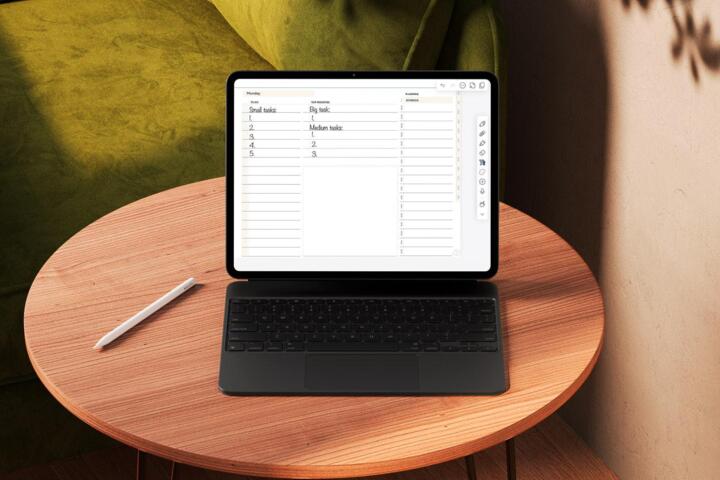
Before opening your laptop, define the three outcomes that would make the day a success. This is a method popularized by J.D. Meier. If you only finished these three things, would the day be a win? If the answer is no, your tasks aren't high-leverage.
On a practical level, write these on a physical sticky note. Digital lists can become infinite "dumping grounds" for low-value ideas. Limiting yourself to three forces the Pareto selection process early in the morning.
Eliminate Shallow Work
Cal Newport defines shallow work as non-cognitively demanding, logistical-style tasks, often performed while distracted. These are the "80%" tasks. To counter this, schedule "Deep Work" blocks of 90 minutes in your Outlook or Cron calendar.
During these blocks, use "Do Not Disturb" modes on macOS or specialized apps like Freedom.to to block distracting URLs. Results from companies implementing "No-Meeting Wednesdays" show a 35% increase in overall team productivity.
Leverage Automation
Identify repetitive tasks that fall into the 80% bucket—like data entry or invoice follow-ups—and use Zapier or Make.com to automate them. If a task takes 10 minutes but occurs 20 times a month, that is 40 hours a year saved.
Automating a workflow ensures that high-value human energy is reserved for creative problem solving and strategic decision-making. High-leverage workers act as "architects" of systems rather than "cogs" within them.
Say No by Default
High-leverage living requires a "Hell Yes or No" mentality. Every time you say yes to a low-value meeting, you are saying no to a high-value project. Use tools like Calendly to set strict boundaries on your availability.
Statistics suggest that senior executives spend up to 23 hours a week in meetings, many of which are deemed "unproductive." By pruning your calendar, you reclaim the space necessary to identify the next 20% opportunity.
Efficiency Cases
Case 1: Software Startup "Alpha"
The team was spending 60% of their time on customer support tickets for minor UI tweaks. They shifted focus to a "Core Stability" sprint, fixing the three primary backend bugs causing the tickets.
Result: Support volume dropped by 72% within 30 days, allowing the engineering team to ship a major feature that increased MRR (Monthly Recurring Revenue) by 25%.
Case 2: Freelance Consultant "Jane Doe"
Jane was active on five social media platforms but realized 90% of her clients came from LinkedIn and one specific industry newsletter. She cut Twitter, Instagram, and Facebook entirely.
Result: She saved 15 hours per week. She used that time to write one high-authority whitepaper. That paper led to two keynote speaking invitations and a 40% increase in her hourly consulting rate.
Tool Comparison
| Category | Tool Recommendation | Impact on Productivity |
|---|---|---|
| Time Tracking | Toggl Track / RescueTime | Identifies the "leaky" 80% of your day. |
| Task Prioritization | Motion / Morgen | Uses AI to schedule high-leverage tasks automatically. |
| Workflow Automation | Zapier / Make.com | Eliminates manual 80% tasks through logic. |
| Distraction Blocking | Freedom / Cold Turkey | Protects the 20% deep work windows. |
| Communication | Loom | Replaces 30-minute meetings with 2-minute videos. |
Common Errors
One major mistake is misidentifying what "leverage" actually looks like. Many confuse "urgent" with "important." An urgent email from a colleague might feel like a priority, but it’s often just noise. Use the Eisenhower Matrix to filter these out.
Another error is failing to re-evaluate. The tasks that were high-leverage last year might be the "maintenance 80%" today. Conduct a "Pareto Audit" every quarter to ensure your focus hasn't drifted.
Finally, don't use 80/20 as an excuse for laziness. It’s not about working less; it’s about making sure your hard work actually matters. The goal is "intensity over duration."
FAQ
How do I know if a task is high-leverage?
Ask: "If this is the only thing I accomplish today, will I be satisfied?" High-leverage tasks usually have a "compound effect," meaning they make future tasks easier or unnecessary.
Can 80/20 be applied to team management?
Yes. Usually, 20% of your team members produce 80% of the value. Your job as a leader is to identify those "A-players" and remove any roadblocks they face.
Does this mean I ignore 80% of my work?
Not necessarily. It means you delegate, automate, or batch those tasks. You should spend the "prime" hours of your circadian rhythm on the 20% and the "slump" hours on the 80%.
How does this rule apply to personal life?
Identify the 20% of habits—like sleep, exercise, or meditation—that contribute to 80% of your mental clarity and physical health. Prioritize those above all else.
What if my boss gives me low-leverage work?
Present them with your audit. Show the data on where your time is most effective for the company's bottom line. Most managers value "ROI-thinking" over blind obedience.
Author’s Insight
In my years of consulting for high-growth tech firms, I’ve noticed that the most successful CEOs aren't the ones working 100 hours a week; they are the ones who are ruthlessly protective of their focus. I personally stopped checking email before 11:00 AM three years ago, and my creative output tripled. My advice is to start small: identify just one "80% task" today and delete it. You will feel an immediate lightness in your cognitive load that allows you to spot the real opportunities.
Summary
The 80/20 rule is not a one-time fix but a perpetual filter for your professional life. By auditing your time, automating the mundane, and focusing on high-leverage outcomes, you escape the trap of "performative busyness." Start by using a tool like Toggl to track your next 48 hours. Once you see the data, the path to disproportionate results becomes undeniable. Actionable advice: Pick your "Big 3" for tomorrow tonight, and do not open your inbox until the first one is complete.