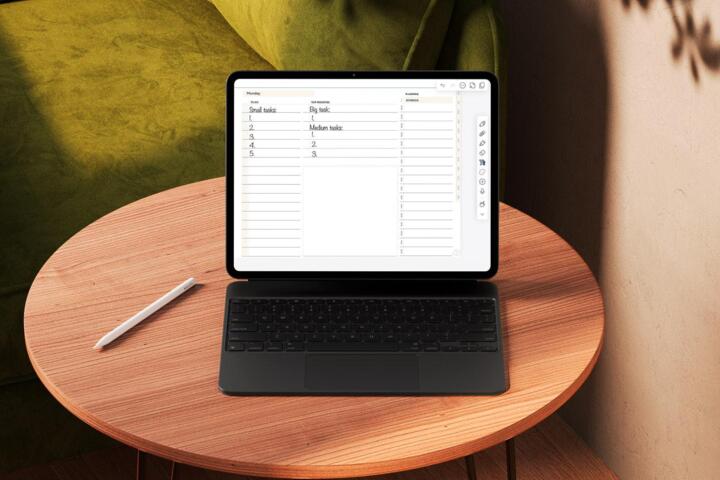
The Cognitive Reset
A shutdown ritual is not just about closing a laptop; it is a neurological signal that the "performance phase" of your day has ended. Research in the Journal of Occupational Health Psychology suggests that employees who mentally detach from work experience significantly lower levels of exhaustion and higher life satisfaction. When you don't define the end of the day, your brain continues to cycle through open loops—unanswered emails, unfinished reports, and tomorrow’s deadlines.
Practically, this looks like a 10-to-15-minute sequence of repetitive, calming actions. For example, a senior developer at Microsoft might use this time to commit their final code, clear their physical desk, and write a "Tomorrow" list. This creates a physical and mental boundary. In fact, a study by the American Psychological Association found that workers who utilized a formal "re-entry" and "exit" process reported a 20% increase in focus during active work hours because they weren't worried about forgotten tasks.
Think of it as cooling down an engine. If you switch off a high-performance car immediately after a race, you risk damage. Your brain requires a similar cooling period to move from the sympathetic nervous system (fight or flight/productivity) to the parasympathetic nervous system (rest and digest).
Modern Burnout Roots
The primary issue facing professionals today is "clandestine work"—the habit of checking Slack or Microsoft Teams while sitting on the sofa or before bed. This behavior prevents the brain from ever entering a deep recovery state. When you leave tasks "half-finished" in your mind, your cognitive load remains high throughout the evening. This is known as the Zeigarnik Effect: the tendency to remember uncompleted tasks better than completed ones, which manifests as intrusive work thoughts during dinner.
Furthermore, the "Always-On" culture fueled by mobile notifications creates a state of continuous partial attention. If you haven't signaled to your team and yourself that you are offline, you remain psychologically tethered to the office. The consequences are dire: chronic cortisol spikes, disrupted circadian rhythms, and eventual burnout. Real-world data from Deloitte indicates that poor mental health due to burnout costs employers billions annually, yet the solution often lies in individual micro-habits rather than macro-policy changes.
Tactical Rituals
Review Your Calendar
Open Google Calendar or Outlook and look at the next 48 hours. Identifying potential conflicts or heavy meeting days now prevents them from becoming "surprises" that wake you up at 3:00 AM. If you see a back-to-back schedule, block out 30 minutes for a "buffer" task now.
The "Brain Dump" Method
Use a tool like Todoist or Notion to offload every lingering thought. Don't worry about formatting; just get every "I need to remember..." out of your skull and onto digital paper. This act of externalization reduces cognitive load by up to 15%, according to productivity experts like David Allen.
The Physical Sweep
Clear your desk of coffee mugs, stray papers, and charging cables. A cluttered environment triggers visual stress signals. Closing all 20+ tabs in Google Chrome (use an extension like OneTab to save them if you must) acts as a digital version of locking the office door.
Communication Triage
Check your inbox one last time, not to reply, but to archive or snooze. Use the "Snooze" feature in Gmail to push non-urgent threads to tomorrow morning. This ensures your "Unread" count is manageable, preventing late-night anxiety when you accidentally see a notification.
Define the "Shutdown" Word
Borrow a page from Cal Newport’s book: literally say a phrase out loud, such as "Shutdown complete." It sounds silly, but this auditory cue anchors the habit. It acts as a physiological "off" switch for your professional persona, allowing your personal persona to take over.
Device Displacement
Physically move your work phone or laptop to a different room or a dedicated "charging station" that isn't the bedroom. According to RescueTime data, users who keep devices out of the bedroom report a 30% improvement in perceived sleep quality and morning energy levels.
Success Cases
Case A: Digital Marketing Agency
A mid-sized agency with 50 employees noticed a 40% turnover rate due to burnout. They implemented a mandatory 15-minute "Dark Mode" at 5:30 PM, where all internal messaging was silenced. They provided employees with a checklist including "Clear Inbox" and "Set Tomorrow's Top 3." Within six months, employee retention increased by 25%, and project delivery speed improved as staff returned each morning fully recharged.
Case B: Independent Consultant
A freelance consultant struggling with insomnia started using Trello for an end-of-day audit. By moving cards to a "Done Today" and "Top Priority Tomorrow" list, she effectively "parked" her stress. Her self-reported stress levels dropped by 18% over three weeks, and she stopped checking email after 7:00 PM entirely, leading to a more consistent 7-hour sleep cycle.
Tool Comparison
| Tool Category | Recommended Service | Features & Cost |
|---|---|---|
| Task Manager | Todoist | Daily goal resets. (Free / $4.99) |
| Digital Declutter | OneTab | Collapses Chrome tabs. (Free) |
| Focus Limits | Freedom.to | Scheduled app blocks. ($3.33 mo) |
| Reflection | Day One | Reflection prompts. (Free / Pro) |
| Communication | Slack | Automatic DND schedules. (Free / Pro) |
Avoiding Pitfalls
The biggest mistake is inconsistency. A ritual only works if the brain can predict it. Don't skip the ritual just because you finished work late; in fact, that is when you need it most. Another error is making the ritual too complex. If your shutdown takes 45 minutes, you will eventually abandon it. Keep it under 15 minutes.
Avoid "Just one more email" syndrome. If you find yourself gravitating back to your phone after the ritual, use "Focus Mode" on iOS or Android to hard-block work apps after 6:00 PM. Treat your ritual as a non-negotiable appointment with your future self. If you break the boundary, you aren't just working; you are stealing recovery time from tomorrow's performance.
FAQ
What if I have an urgent deadline?
Even during "crunch time," a 5-minute version of the ritual is vital. It allows you to segment the "work" from the "sleep," preventing the deadline stress from ruining your rest, which would only make you less productive the next day.
Does this work for remote workers?
It is actually more critical for remote workers. Without a physical commute to act as a buffer, the shutdown ritual is the only thing standing between your "office" and your "home." Use a physical trigger like changing your clothes or taking a walk.
What should be my first step tomorrow?
Your ritual should dictate your start. By writing down your "Top 3" tasks during your shutdown, you eliminate "decision fatigue" the following morning. You wake up knowing exactly where to point your energy.
How do I handle international teams?
Set clear expectations in your Slack profile. Use the "Status" feature to show you are "Offline until 9:00 AM EST." Most colleagues will respect the boundary if it is clearly communicated and consistent.
Can I do this ritual on my phone?
It is better to do it on the primary device you work on. If you work on a laptop, close the laptop as the final act. Using a phone for the ritual risks getting sucked back into social media or notifications.
Author’s Insight
In my years of consulting for high-growth startups, I have found that the most "productive" people aren't those who work the longest, but those who recover the fastest. I personally use a three-step physical trigger: I close my laptop, put my work notebook in a drawer, and immediately go for a 10-minute walk without my phone. This "fake commute" has been the single most effective tool in preventing the afternoon's stress from bleeding into my dinner with family. My advice is to start small—just clear your desk today—and build from there.
Summary
Sustainable productivity is impossible without intentional rest. A daily shutdown ritual bridges the gap between high-pressure output and the deep recovery needed for long-term success. Start by choosing three simple actions—reviewing your calendar, clearing your digital tabs, and physically stowing your equipment. By reclaiming the final minutes of your workday, you aren't just ending a shift; you are protecting your mental clarity and ensuring that when you show up tomorrow, you are doing so with a full tank of cognitive energy.