The Deep Work Era
Modern professionals face a constant barrage of digital interruptions that shatter cognitive flow. Deep work, a term popularized by Cal Newport, requires long periods of uninterrupted concentration. Research from the University of California, Irvine, suggests it takes an average of 23 minutes and 15 seconds to return to a task after being interrupted.
For a developer writing complex Python scripts or a financial analyst modeling projections, a single WhatsApp vibration can derail an entire hour of progress. Digital Focus Modes on iOS 17/18 and Android 14/15 provide the structural guardrails needed to protect this high-value time.
Recent data from RescueTime indicates that the average knowledge worker checks communication tools every 6 minutes. By mastering system-level focus settings, you can reduce these involuntary checks by 70%, effectively reclaiming two hours of productive output every day.
The Distraction Trap
Most users believe that simply turning their phone face down is enough to maintain focus. This is a fallacy known as the "brain drain" effect. A study published in the Journal of the Association for Consumer Research found that the mere presence of a smartphone reduces available cognitive capacity.
The primary mistake is relying on "Do Not Disturb" as a blunt instrument. When you block everything, you create "notification anxiety," worrying that you might miss a critical call from a client or a family emergency. This leads to manual checking, which is just as disruptive as the notification itself.
Without granular configuration, your device remains a slot machine. The intermittent reinforcement of a social media "like" or a non-urgent email triggers dopamine loops that compete with the difficult, low-dopamine tasks required for professional growth.
Advanced Focus Tactics
Custom iOS Focus Filters
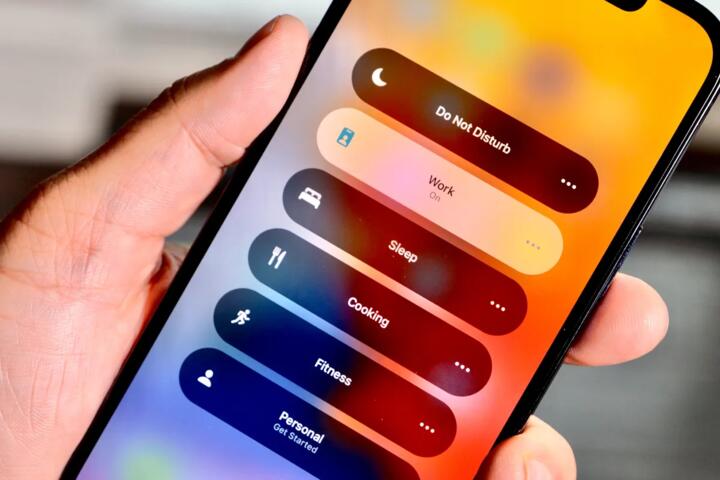
On iOS, Focus Filters are the secret to true deep work. Unlike basic silencing, filters change how apps behave. You can configure a "Deep Work" mode that hides specific Outlook folders or limits Safari to work-related tabs. This prevents the "accidental" check of a personal inbox while looking for a project file.
In practice, use the "Set Schedule" feature to trigger this via location. When you arrive at your coworking space or home office, your iPhone can automatically hide distracting Home Screen pages, leaving only Slack, Notion, and your calendar visible.
Android Work Profile
Android's Work Profile is a powerful partition that separates professional apps from personal ones. By integrating this with "Digital Wellbeing" schedules, you can effectively "kill" the work side of your phone at 6:00 PM and "kill" the social side during morning deep work blocks.
This method utilizes a separate container at the OS level. During a deep work session, TikTok and Instagram are not just silenced; they are grayed out and inaccessible without a conscious, multi-step override, adding a vital "friction layer" to bad habits.
Whitelist Hierarchy
Effective focus requires a strict whitelist. For iOS, use "Allowed People" and "Allowed Apps." Set up a "VIP" list in your contacts including your direct supervisor and key clients. Only these individuals should be able to break the silence during your 9:00 AM to 11:00 AM block.
On Android, use "Priority Conversations" within the Do Not Disturb settings. This ensures that a Slack message from a specific project channel bypasses the block, while general #random chatter is suppressed until your break. This specificity builds the trust necessary to keep the phone away.
Automated Trigger Logic
Automation removes the "decision fatigue" of starting deep work. Use Apple Shortcuts or Android's "Rules" to trigger Focus Mode when specific conditions are met. For example, setting your phone to enter "Deep Work" automatically when it connects to your office Wi-Fi or a specific Bluetooth keyboard.
Advanced users can trigger Focus Mode when opening a specific app like Obsidian or VS Code. This creates an immediate environmental shift, signaling to your brain that the "hunting and gathering" phase of the day is over and the "building" phase has begun.
Visual Signal Systems
Focus Mode isn't just for you; it's a signal to others. On iOS, enabling "Share Focus Status" tells contacts in iMessage that you have notifications silenced. This manages expectations and reduces the pressure to respond immediately, which is a major source of cognitive load.
On Android, you can use the "Flip to Shhh" gesture found on Pixel devices. Placing the phone face down physically activates the Focus Mode, providing a tactile ritual that prepares the mind for concentration. These small cues reduce the willpower required to stay on task.
Case Study Results
A mid-sized architectural firm, Studio-X, struggled with project delays. Their 15 architects reported feeling "constantly reactive." The firm implemented a mandatory "No-Comms" block from 9:00 AM to 12:00 PM daily, enforced through synchronized iOS Focus Modes and Android Work Profiles.
After three months, the firm saw a 22% increase in billable output. Architects reported 40% lower stress levels, as they no longer felt obligated to answer non-urgent emails during their creative drafting phase. The "VIP" whitelist ensured that urgent site issues still reached the team, preventing any operational bottlenecks.
Individual software developers using these methods often report "flow state" entry within 12 minutes, compared to the 30+ minutes required when sporadic notifications are present. The data consistently shows that system-level enforcement outperforms self-discipline every time.
Technical Comparison
| Feature | Apple iOS | Android OS | Impact |
|---|---|---|---|
| Logic | Focus Filters | Work Profile | High |
| Triggers | Smart Active | Schedules | Medium |
| Alerts | Time Sensitive | Priority Only | High |
| Status | Shared Status | Auto Reply | Low |
Avoid Critical Errors
The most common mistake is failing to account for "Time Sensitive" notifications. On iOS, if you block everything, you might miss a multi-factor authentication (MFA) code needed to log into a work tool. Always allow "Time Sensitive" alerts for security and banking apps to avoid being locked out of your own workflow.
Another error is the "Ghost Notification" habit. Even if the phone is silent, the screen lighting up can be a distraction. Ensure "Dim Lock Screen" is enabled in your Focus settings. This removes the visual "ping" that tempts you to pick up the device and check why the light changed.
Finally, don't forget your other devices. If your iPhone is in Focus Mode but your Mac or iPad is ringing with the same iMessages, the system fails. Use the "Share Across Devices" toggle on Apple products to ensure a unified cone of silence across your entire ecosystem.
FAQ
Will I miss emergencies?
No, both platforms allow for "Emergency Bypass." You can set specific contacts to ring even if the phone is on silent. Additionally, there is a "Repeated Calls" setting where a second call from the same person within three minutes will break through the focus lock.
Can I have multiple modes?
Yes, you should have at least three: "Deep Work" (strict), "Personal Time" (no work apps), and "Sleep." This allows you to tailor the digital environment to your current intent without manually toggling individual app settings every time your context changes.
How do I automate it?
On iOS, go to Settings > Focus > [Your Mode] > Add Schedule. You can choose time, location, or app-based triggers. On Android, go to Settings > Digital Wellbeing > Focus Mode > Set a schedule. This ensures your productivity system runs on autopilot.
What about Slack/Teams?
You can allow these apps but filter the specific people who can reach you. Both systems allow you to whitelist specific individuals. This way, your manager can reach you for a "fire," but a coworker's meme in the general channel will stay hidden until you finish.
Does it drain battery?
Actually, Focus Modes often save battery. By preventing the screen from lighting up for every notification and reducing background activity for silenced apps, you decrease the number of "wake cycles" the processor performs, leading to better thermal performance and longevity.
Author's Insight
I have spent the last five years optimizing my digital environment to handle high-stakes consulting work. I found that the transition from manual "Do Not Disturb" to automated, location-based Focus Modes was the single biggest factor in doubling my creative output. My advice is to start with a "Work" mode that only allows three people to reach you—everyone else can wait two hours. The psychological freedom of knowing your phone won't buzz is worth more than any productivity app you can download.
Summary
Setting up a robust Focus Mode is a foundational skill for the modern economy. By utilizing Focus Filters, whitelisting priority contacts, and automating triggers based on location or app usage, you can protect your most valuable asset: your attention. Start by auditing your notification list today and silencing 80% of them. The result will be deeper concentration, higher quality work, and a significantly shorter workday as your efficiency improves.