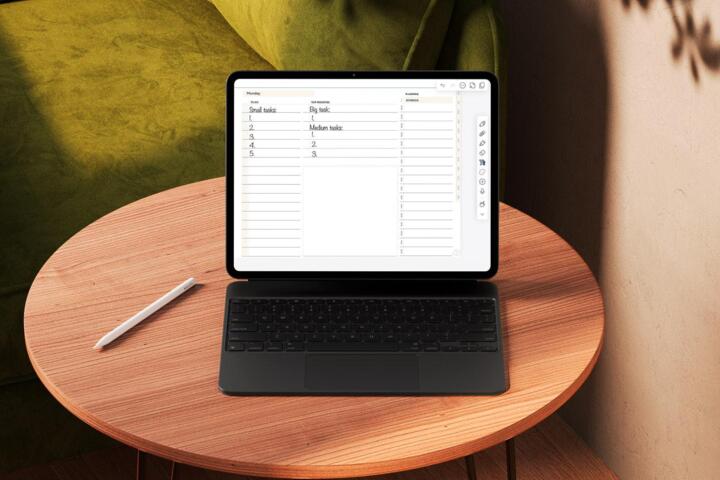
Protecting Focus With Deep Work
Deep work means working on a task that requires sustained attention, with a clear boundary that blocks common interruption channels. The goal is not “feeling focused”; the goal is producing work while your attention stays on the same problem for long enough to make progress.
A practical example: writing a study summary, coding a feature, or solving a complex spreadsheet model. Each task has a “setup cost” (opening the right files, recalling the last decision, reloading context). When interruptions happen, you pay that cost again, which is why short bursts often feel productive while still producing slow output.
In many workplaces, the default rhythm is fragmented: chat pings, email checks, and quick meetings. Deep work changes the rhythm by creating protected blocks, choosing one task per block, and defining what “done enough” means before you start. I’ve seen people try to “just focus harder” and then wonder why the same tasks take twice as long; the missing piece is the environment and the interruption rules.
Where Focus Breaks Down
People often treat distraction as a personal weakness rather than a system behavior. Notifications, open tabs, and frequent context switching create repeated micro-resets of attention. Those resets are small, but they stack up across a day.
Another common mistake is mixing planning with execution. If you start a deep-work block by checking messages “for one minute,” you often end up negotiating priorities instead of doing the task. That negotiation can feel like productivity, yet it delays the moment you actually engage with the hard part.
Deep work also depends on supporting technologies and routines. A phone on the desk, a browser with dozens of active tabs, and a calendar full of unscheduled “quick calls” all increase the chance that your attention gets pulled away. Even the physical setup matters: a cluttered workspace increases visual cues that compete with the task.
Finally, fatigue changes the rules. When sleep debt or stress rises, the brain spends more effort resisting distractions, so the same plan that worked on a rested day fails. You can’t “discipline” your way around exhaustion; you adjust block length and task difficulty.
Solutions And Advice That Work
Design Focus Blocks
Start with a block length you can repeat. Many people do better with 45–90 minute blocks than with 3–4 hour marathons, because breaks help you recover attention control. Use a simple structure: pick one task, define the next concrete output, and set a stop time before you begin.
Example: “Draft 300 words of a section outline” or “Solve rows 120–180 of the model and verify totals.” If you can’t name the output, you’re likely to drift into reading and re-checking. I’ve used a 60-minute block with a 10-minute break on a schedule dated 2026-01-14, and the biggest win was that I stopped negotiating with myself mid-block.
During the block, remove the most likely interruption triggers. Put the phone in another room, close chat apps, and keep only the files needed for the task open. If you must keep a computer connection for work, use a “do not disturb” mode and set exceptions only for urgent contacts.
Control Notifications And Tabs
Notifications are not just alerts; they are cues that trigger a habit loop. A message arrives, your attention shifts, and you reorient to the new context. That reorientation costs time and increases the chance you’ll keep checking.
Use a two-layer approach. First, reduce incoming volume: turn off nonessential notifications for email, chat, and social apps. Second, control timing: check messages at fixed times, such as 11:30 and 16:30. If your role requires rapid response, set a short “triage window” like 10 minutes, then return to the deep-work task.
Browser tabs are another hidden driver. Keep a “parking” list for references you might need later, and close everything else. A practical rule: if a tab hasn’t been used in the last week, it belongs in a saved list or bookmarks, not in your active workspace.
Use A Measurable Routine
Deep work improves when you track outcomes, not feelings. Choose one metric tied to your work: number of completed blocks, pages drafted, problems solved, or commits pushed. Then review weekly to see what disrupted blocks and what tasks fit your attention.
Realistic expectations help. If you currently work in fragments, moving to 2–3 deep-work blocks per day can be a stretch. A more sustainable target is 1 block on workdays at first, then add a second after two weeks of consistency. Many people notice that the first week feels worse because they’re removing shortcuts; the second week often improves once the new routine becomes familiar.
Tools can support the routine, but they should not become the task. A timer app, a simple focus playlist, or a calendar block works. I once tried a complex workflow in a note app version 3.2.1 and spent more time maintaining it than using it, which is why I now prefer minimal systems.
Plan For Interruptions
Interruptions still happen, especially in team settings. The goal is to reduce the damage, not to pretend you live in a quiet lab.
Create an “interruption protocol” before the day starts. For example: if a message arrives during a deep-work block, you log it in a short list and respond during the next triage window. If a meeting runs long, you adjust by shortening the next block rather than abandoning the day.
When you stop a block early, capture a “resume note” in one or two sentences: what you were doing, what decision you reached, and what the next action is. This reduces the setup cost when you return, which is where many people lose time.
Case Examples For Real Life
Student With Notification Drift
Scenario: A graduate student studies for exams while receiving frequent chat messages from classmates. They start deep work but keep checking messages “just to stay in the loop,” then lose momentum and reread the same pages.
Intervention: They turn off chat notifications, schedule two 15-minute group check-ins per day, and use 50-minute focus blocks for problem sets. They also close all learning tabs except the current worksheet and keep a single “questions to ask later” note.
Outcome: Over one week, they complete more practice problems per session and spend less time rereading. The improvement comes from fewer context resets, not from longer study sessions.
Analyst Facing Meeting Overload
Scenario: A data analyst has meetings that start at irregular times, which breaks their ability to plan deep work. They try to work after meetings but often start late and end up doing only quick tasks.
Intervention: They reserve two predictable deep-work windows on the calendar and treat meetings outside those windows as “interruptions with a resume note.” After each meeting, they write the next action for the analysis task and start with the smallest step that moves the work forward.
Outcome: The analyst’s weekly deliverables stabilize because deep work becomes a scheduled activity with a recovery plan. They still attend meetings, but they stop letting meetings erase the day’s progress.
Focus Protection Checklist
| Choice | Low Distraction | Medium Distraction | High Distraction |
|---|---|---|---|
| Phone | In another room | On desk, notifications off | On desk, notifications on |
| Chat | Closed during blocks | Open but muted | Open with alerts |
| Browser tabs | Only task tabs | A few reference tabs | Dozens of active tabs |
| Block plan | Named output + stop time | Output named, no stop time | No output definition |
| Resume note | 1–2 sentences after stop | Sometimes written | Not written |
Use this as a decision aid. If you can’t move at least two items from “high” to “medium,” your deep-work plan will likely collapse under routine interruptions.
Common Mistakes That Undo Progress
One mistake is treating deep work as a mood. If you wait for perfect concentration, you often start late and then compensate by working longer, which increases fatigue and reduces attention control.
Another mistake is choosing tasks that do not fit the block. Reading a long article, searching for sources, or reorganizing files can consume the block without producing a clear output. Deep work blocks need tasks with a measurable endpoint.
People also overestimate how much they can multitask. Switching between writing and checking email creates repeated context resets. Even if each switch seems brief, the cumulative cost shows up as slower completion and more rework.
Finally, some systems become distractions. A complex “focus dashboard” that requires constant setup can steal attention from the work. Minimal tools win when they reduce friction rather than add it.
FAQ
How Long Should A Deep Work Block Be?
Start with 45–90 minutes and adjust based on your ability to produce a concrete output. Shorter blocks work better when fatigue is high or when you are rebuilding the habit after frequent interruptions.
What Should I Do With Urgent Messages?
Use a triage window during the day and define what counts as urgent. During deep-work blocks, log non-urgent messages and respond during the next window to avoid repeated context switching.
Does Blocking Social Media Improve Focus?
Blocking can reduce accidental triggers, but the bigger effect comes from removing cues and setting check times. If you need social media for work, schedule it as a separate task with its own time boundary.
How Do I Handle Meetings That Break My Schedule?
Reserve deep-work windows on the calendar and treat meetings outside them as interruptions. Write a resume note after each meeting so the next block starts with the next action, not a restart.
How Can I Measure Progress Without Feeling Judged?
Track outputs tied to work, such as completed blocks and deliverables, rather than subjective “focus scores.” Review weekly for patterns like which tasks or times of day cause the most block failures.
Author's Insight
Deep work is less about willpower and more about reducing attention resets caused by interruptions, cues, and unclear task endpoints. The most reliable improvements come from scheduling protected blocks, limiting notification channels, and defining a measurable output before you start. When deep work fails, the cause usually sits in the environment (phone, tabs, chat) or in the task choice (no clear endpoint), not in a lack of motivation.
Evidence from attention and habit research supports the idea that context switching carries costs, which shows up as slower work and more rework. The practical approach is to treat focus like a system you can tune: block length, interruption rules, and resume notes. If you want a starting point, choose one change for a week and measure completed outputs, then adjust based on what actually happened.
Key Takeaways
- Deep work succeeds when you define a concrete output and a stop time before you start.
- Notifications and active tabs create repeated attention resets; reduce them and check messages on a schedule.
- Plan for interruptions with triage windows and a short resume note to lower restart costs.
- Track outputs and completed blocks to learn which routines work for your energy and schedule.